

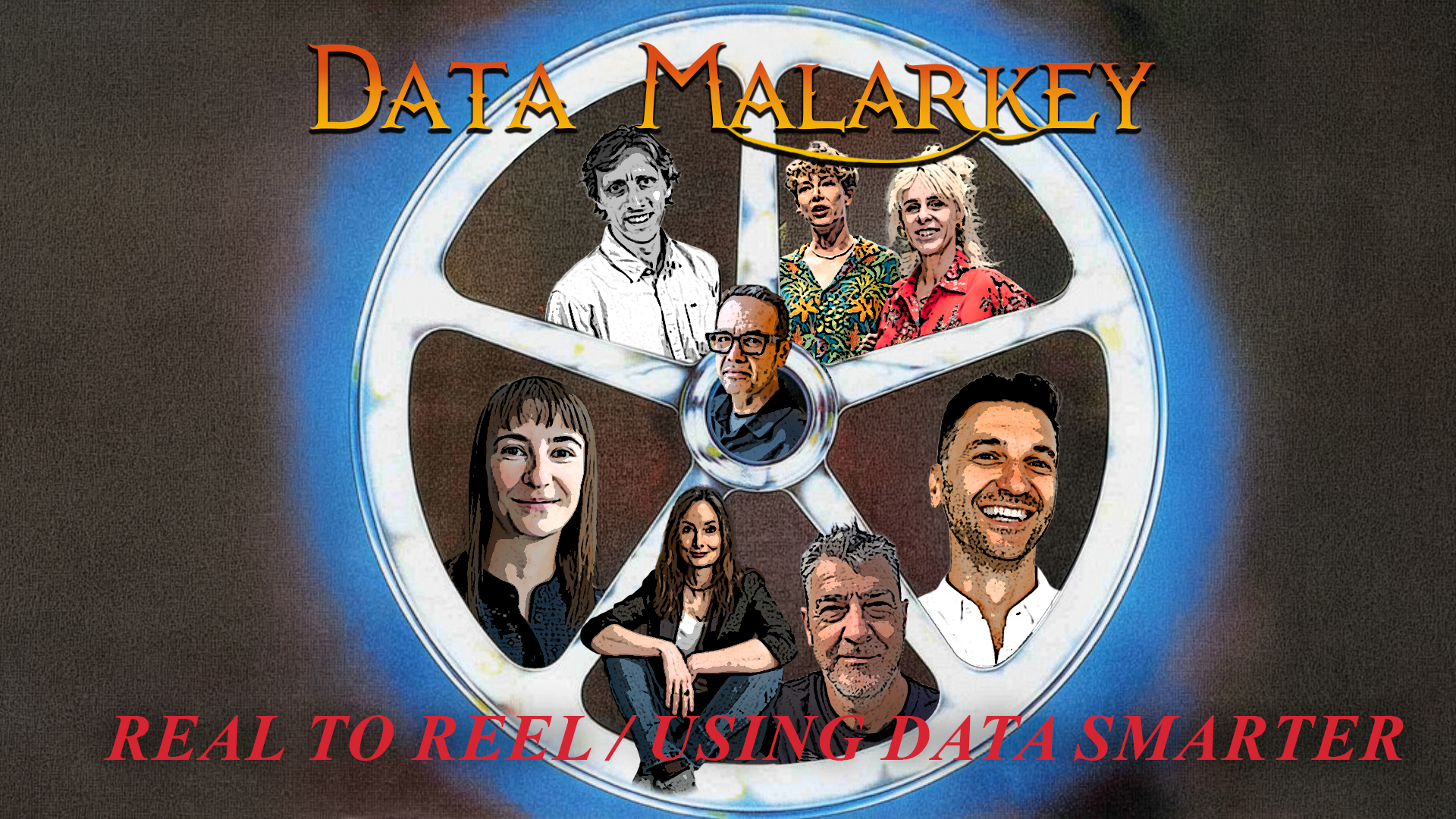
In this latest episode of Data Malarkey (“Real to Reel: Using Data Smarter”) Master Data Storyteller, Sam Knowles, looks back over season ten’s guests, insights, and recurring themes.
After ten seasons, 73 episodes, and more than three years of conversations about using data smarter, this end-of-season wrap-up shows just how wide the podcast’s territory has become. Season Ten moved from football and feminism to inclusive marketing, AI integrity, autonomous delivery robots, the four-day week, and smarter communications measurement. The common thread was not data for its own sake, but data as the cornerstone of making better decisions.
The season opened with a first for Data Malarkey: two guests on the same episode. Karen and Charlie Dobres told the story of Lewes FC, the community-owned football club that became the only club in the world to give its women’s and men’s first teams the same playing budgets, equal access to the main stadium, and the same institutional respect. Karen described how attention became a strategic asset. By welcoming “unwelcome women”, building networks of sisterships, staging suffragette-inspired activations, and positioning Lewes as a disruptor brand, the club turned equality into both a moral stance and a practical model.
Charlie extended that argument through Lewes’s campaign to equalise FA Cup prize money between the women’s and men’s competitions. His point was simple: using historic revenue data to justify future inequality is like driving while looking only in the rear-view mirror. Data should inform the road ahead, not trap organisations in the assumptions of the past.
Ali Hanan, founder of Creative Equals, brought a related argument from the world of marketing. Her concept of “the new ROI – Return on Inclusion” reframes diversity not as a side issue, but as a driver of effectiveness. Drawing on evidence from hundreds of brands across dozens of countries, she showed how inclusive work can improve sales, consideration, loyalty, and pricing power. Inclusion, in this telling, is not only about who appears in advertising, but who is meaningfully represented, and who gets to shape the work.
Harriet Kingaby, co-chair of the Conscious Advertising Network, took the conversation into information integrity. Her concern was not just misinformation, but the algorithmic systems that decide what people see, how often they see it, and whose voices are amplified or suppressed. Her optimism is measured rather than naïve: fear without agency is useless, but advertisers do have power if they ask smarter questions about platforms, guardrails, and incentives.
Serial entrepreneur Ahti Heinla is the co-founder of Skype and Starship Technologies. He offered a different kind of data story: one rooted in building. From internet calling to autonomous delivery robots, his work shows what happens when software thinking meets real-world problems. His most striking observation was that the biggest data challenge is often not gathering data but getting people to use it.
Charlotte Rae, who leads the Sussex 4 Day Week research programme at that county’s eponymous university, brought evidence to one of work’s biggest live experiments. Her findings suggest that shorter working weeks can improve sleep, motivation, wellbeing, and productivity when implemented carefully.
Finally, Dino Delić of Meltwater argued that communications teams need fewer backward-looking reports and more actionable intelligence. Tools matter, but skills, purpose, and internal alignment matter more.
Across the season, the message is clear: smarter data is not more data. It is data used with judgement, purpose, and humanity. This Greatest Hits episode is perfect for both aficionados of Data Malarkey and ingenus. Those who know it well can find episodes, guests, and themes for their next listen; those who are new to it can surely find an entry point touching on one or more areas of their personal and professional interest.
—
The first draft of this blog was written by ChatGPT, using a transcript of the episode and an ever-refined prompt. It was then edited by real humans.