

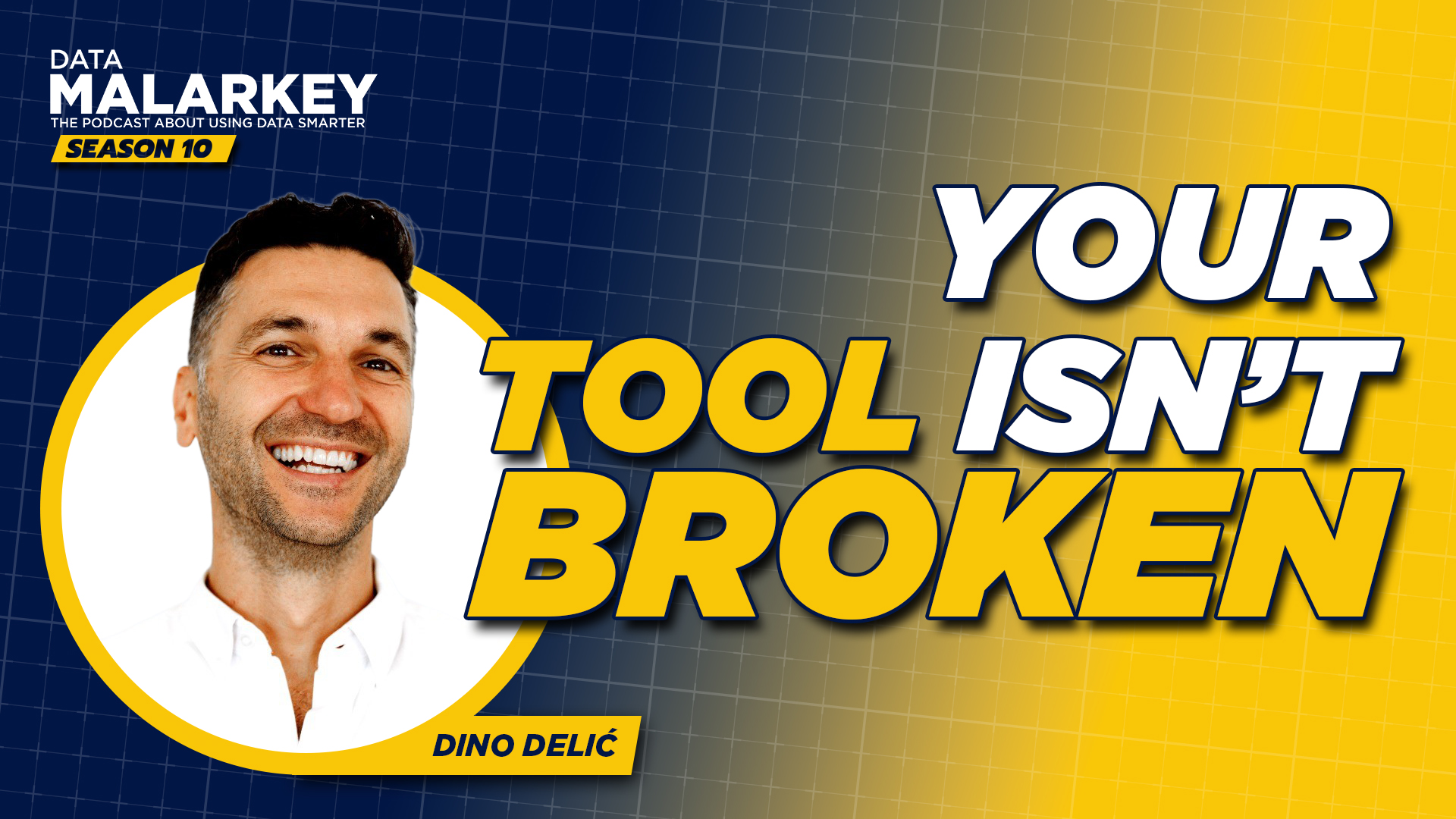
In this episode of the Data Malarkey podcast, Master Data Storyteller, Sam Knowles, spoke with Dino Delić of Meltwater, the leading provider of media, social, and consumer intelligence. Dino is a long-standing practitioner of data-driven communications who combines a keen sales instinct with coaching discipline. What emerged was not a conversation about data and tools, but one about behaviour: how individuals and organisations move from data to insight, and from insight to action. The episode was released on the penultimate day of April 2026, just a week ahead of Meltwater’s annual Summit in New York City, though the learnings for communicators are timeless and evergreen.
Dino’s central argument is disarmingly simple. Most organisations do not lack data. They lack the will, the skills, and the structures to use it well. Too often, communications teams produce reports that describe what has happened, rather than influencing what should happen next. The result is activity without impact.
Clarity out of frustration
He begins where many do not: with frustration. Ask any practitioner when they last wanted to throw their computer out of the window, and the answer will almost always involve data that failed to inform a decision. That moment matters. It reveals not a tooling problem, but a thinking problem. The instinct is to seek “best practice”, yet this often becomes a way of avoiding change. The more productive route is to start with what matters most to the organisation, typically what the CEO cares about, and work backwards to design communication that moves people and outcomes. That should be the North Star.
This emphasis on alignment is critical. Data, in Dino’s view, should not serve as a retrospective report card. It should function as a forward-looking decision engine. That requires collaboration across teams, not just within communications. When insight remains siloed, its value diminishes. When it travels, it shapes product, sales, and strategy.
The one redeeming benefit of AVE
There is also a useful provocation in his attitude to legacy metrics. Advertising Value Equivalency, long criticised for being a measure of nothing and yet stubbornly persistent, is not simply a relic. It is a signal. If someone is using it, they are at least trying to demonstrate impact. The opportunity lies in redirecting that intent towards more meaningful measures, rather than dismissing it – and them – outright, however tempting that may seem.
Unsurprisingly, the conversation turned to artificial intelligence. Here, Dino is both optimistic and cautious. AI accelerates thinking, compresses time, and lowers the cost of experimentation. Tasks that once required teams and budgets can now be advanced by an individual with curiosity and discipline. Yet there is a risk of superficial adoption. Using AI to generate answers without understanding the underlying question is no advance at all. The distinction he draws is a useful one: are you directing the tool, or reacting to it? Are you the cat or the person holding the laser pen and making the cat dance and pounce?
Building capability
What underpins all of this is a commitment to capability building. Dino’s “run club” and research initiatives are not marketing flourishes. They are attempts to create environments and communities where practitioners can learn, test, and improve without the immediate pressure to buy. It is a long-term play, rooted in the belief that better practitioners make better clients, and ultimately better businesses.
Summing up
There is a lesson here for anyone working with data. The challenge is not access, nor even analysis. It is the discipline to connect data to decisions, and decisions to outcomes. That requires clarity, curiosity, and a willingness to change how we work.
Less reporting, more resolve.
—
The first draft of this blog was written by ChatGPT, using a transcript of the episode and an ever-refined prompt. It was then edited by real humans.